
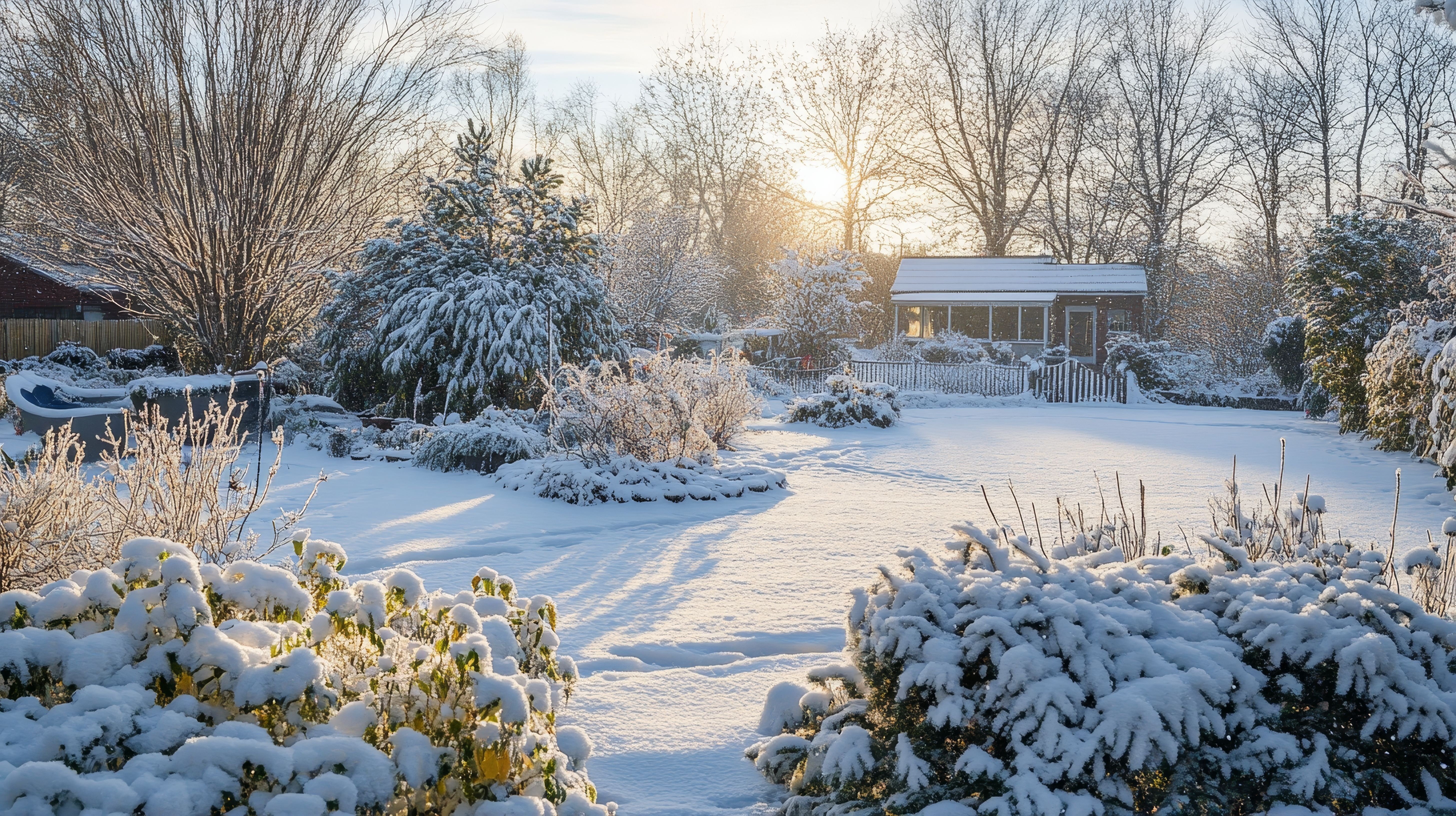
In Southeast Michigan, we know that winter isn't just a season; it’s a test of endurance. While our trees and shrubs may look like they are simply "sleeping" through the snow, the fluctuating temperatures and heavy ice of a Metro Detroit winter can put a ton of stress on your landscape.
At Tree Safari, we believe that proactive care is the secret to a vibrant spring. To help your property stay strong during the deep freeze, we’ve put together this essential winter care checklist for Michigan homeowners.

1. Manage Heavy Snow Accumulation
A fresh snowfall looks beautiful, but "wet" snow can weigh hundreds of pounds. When that weight sits on brittle, dormant branches, it often leads to snapping and structural damage.
- The Proper Technique: If you see branches bowing under snow, use a broom to gently sweep upward. The Golden Rule: Never shake a frozen branch. In sub-freezing temperatures, wood becomes brittle; shaking it has the potential to cause internal "fracturing" even if the branch doesn't break off completely.
- Ice Management: If a branch is coated in ice, leave it alone. Attempting to chip ice off will almost certainly damage the bark. Let nature take its course and melt it away.
2. Guard Against Frost Cracks and Sunscald
Have you ever heard a loud "pop" from your yard on a sunny winter day? That’s often a frost crack. In Michigan, the winter sun can heat up the dark bark of a tree (especially on the south and west sides). When the sun sets and the temperature plunges, the bark contracts faster than the wood underneath, causing it to split.
- Protect the Vulnerable: Young, thin-barked trees like Maples, Lindens, and Crabapples are most at risk.
- The Safari Solution: Consider using light-colored tree wraps. These reflect the sunlight, keeping the bark at a more consistent temperature. Just remember to remove the wrap in early spring to prevent moisture buildup!

3. Combat "Winter Burn" on Evergreens
Evergreens like Boxwoods, Yews, and Arborvitae continue to lose moisture through their needles all winter long. Because the ground is frozen, they can’t pull new water up through their roots to replace what they lose to the biting Michigan winds. This leads to the ugly, brown, "burned" look you may see in March.
- Anti-Desiccant Sprays: At Safari Tree, we recommend an anti-desiccant application in late fall/early winter. This acts as a protective "sealant" to help the plant hold onto its moisture.
- Hydration: If we have a mid-winter thaw where the ground isn't frozen, giving your evergreens a deep drink of water can be a lifesaver.
4. Monitor for Rodent and Wildlife Damage
When food is scarce, rabbits and voles turn to your trees and shrubs for a snack. They often "girdle" the base of trees by eating the bark, which can effectively cut off the tree’s nutrient supply and kill it by spring.
-
Check the Base: After a heavy snow, check around the trunks for signs of chewing.
-
Physical Barriers: Hardware cloth or mesh guards around the base of young trees can prevent "critter" damage before it starts.
5. Take Advantage of Dormant Pruning
Winter is actually one of the best times to prune your trees. Because the leaves are gone, our arborists can see the "skeleton" of the tree clearly, making it easier to identify diseased or hazardous branches.
-
Disease Prevention: Pruning in winter is especially critical for Oak and Elm trees to prevent the spread of Oak Wilt and Dutch Elm Disease, as the insects that spread these fungi are inactive during the cold months.

Prepare Your Landscape for a Successful Spring
Winter care isn’t just about survival; it’s about setting the foundation for a lush, healthy canopy when the warm weather returns.
If you’re worried about how your trees are handling the Michigan winter, or if you want to schedule a Dormant Pruning session, our certified arborists are here to help.
Contact Safari Tree today for a professional property assessment and let's keep your "safari" thriving all year long.