Dead or Damaged Tree Branches: What You Should Look for This Fall
As Michigan moves into fall, most homeowners are focused on changing leaves, cooler temperatures, and getting their yards ready for winter. But this is also a good time to take a closer look at the trees around your property.
As foliage begins to thin, dead, broken, or declining branches can become easier to spot. Catching those issues now can help you better understand the condition of your trees before winter weather arrives.
What Should You Look For?
You do not need to be a tree expert to notice when something looks off.
Take a walk around your property and look for:
- Dead or leafless branches
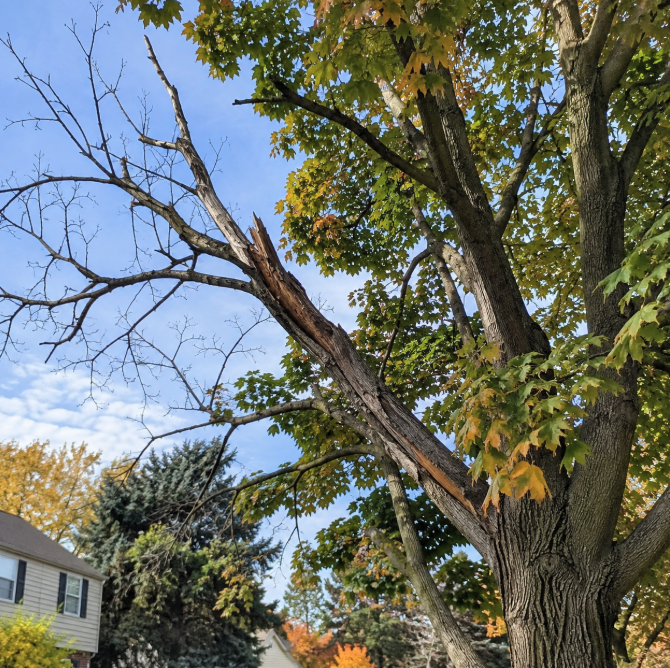
- Broken, cracked, or hanging limbs
- Peeling or damaged bark
- Areas of noticeable branch dieback
- Branches rubbing or crossing each other
- Thinning sections of the canopy
- Any major changes in the overall appearance of the tree
Not every unusual-looking branch means there is a serious problem, but visible changes can be a sign that the tree is dealing with stress, damage, insects, disease, or another health issue.
Why Check Your Trees Before Winter?
Michigan winters can be tough on trees.
Snow, ice, wind, and freezing temperatures can place additional stress on branches that are already weakened or damaged. A branch that looks questionable now may become more vulnerable once winter weather hits.
That does not mean every damaged branch needs to be removed immediately. It does mean fall is a smart time to identify potential concerns and have them properly evaluated.
Not Every Tree Problem Has the Same Cause
One of the biggest reasons a professional evaluation matters is that tree problems can look very similar from the outside.
Branch decline may be connected to:
- Insect activity
- Fungal disease
- Environmental stress
- Physical damage
- Nutrient-related issues
- Other tree health concerns
Safari Tree offers a range of tree and shrub health-care services designed to address different types of problems, including insect and disease treatments, tree injections, deep-root feeding, and other targeted applications. Service_Training_Binder
The right treatment depends on what is actually affecting the tree.
When Pruning or Removal May Be Needed
Safari Tree also offers pruning, trimming, cutting, and removal services when tree work is needed. Service_Training_Binder
In some cases, removing a damaged or declining branch may be part of the solution. In others, the tree may benefit more from treatment aimed at the underlying health issue.
That is why it is important to evaluate the full condition of the tree instead of assuming trimming alone will solve the problem.
Give Your Trees a Fall Checkup
Fall is a good opportunity to look at your trees a little more closely.
If you notice dead branches, cracking, unusual thinning, hanging limbs, or anything else that does not look right, it may be time for a professional evaluation.
Safari Tree focuses on tree and shrub health, insect and disease prevention, and targeted treatment options designed to support long-term tree health. Official Company Brand Guidelin…
Concerned about one of your trees? Contact Safari Tree to schedule an evaluation and determine the best next step before winter arrives.