The emerald ash borer (EAB) may be small—a metallic-green beetle no larger than a penny—but the damage it causes is devastating. Since its discovery in Southeast Michigan in 2002, EAB has killed tens of millions of ash trees across the state, permanently changing our landscapes and destroying local ecosystems that depend on them.
If you have ash trees on your property, awareness and early action are critical. Here’s what to watch for right now—and how to protect your trees before it’s too late.

What to Look for This Month (Spring–Early Summer)
1. D-Shaped Exit Holes
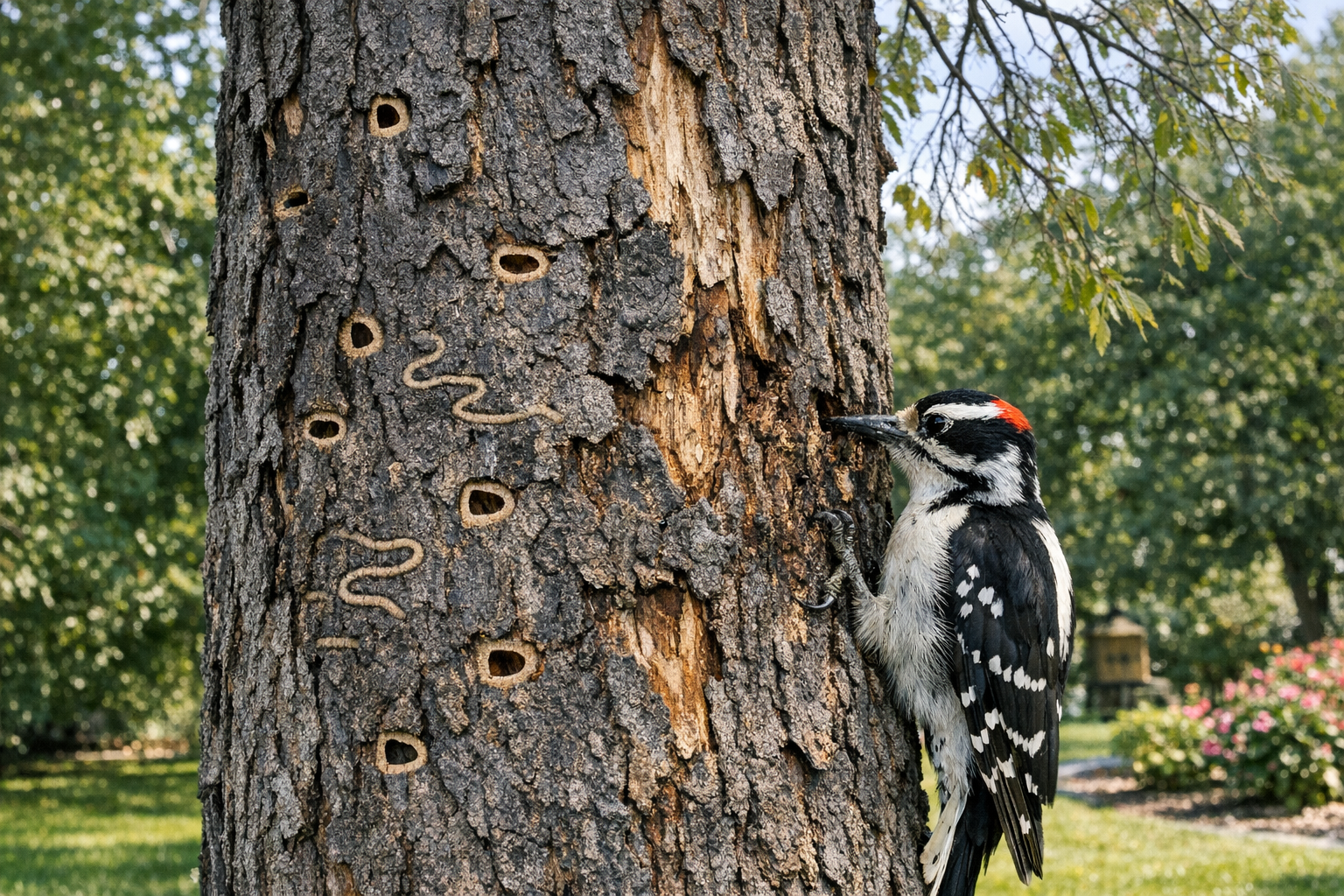
One of the most recognizable signs of EAB is small, D-shaped exit holes (about 1/8 inch wide) on the tree’s bark. These holes are created when adult beetles emerge from the tree.

2. S-Shaped Tunnels Under the Bark
3. Thinning Leaves & Dying Branches
- Leaves getting thin or sparse
- Branches dying from the top down
This is often one of the earliest visible signs.
4. Bark Splitting or Peeling
5. Increased Woodpecker Activity
Woodpeckers are natural predators of EAB larvae. If you notice increased pecking or flaking bark, it may mean they’re feeding on an infestation beneath the surface.

Why It Matters
EAB larvae feed on the inner bark—the tree’s lifeline—blocking the flow of water and nutrients. By the time visible symptoms appear, the infestation is often well underway. Without treatment, most ash trees will die within just a few years.
What Homeowners Can Do
1. Don’t Move Firewood
Transporting firewood is one of the fastest ways EAB spreads. Always buy and burn firewood locally.
2. Act Early
Proactive treatment can successfully protect healthy ash trees—but timing is everything. Waiting too long can limit your options and increase costs.
3. Schedule a Tree Inspection
If you notice any of these warning signs, it’s important to act quickly. A certified arborist can determine the health of your tree and whether treatment is still effective.
4. Monitor Regularly
Check your ash trees every few weeks during spring and summer. Early detection can mean the difference between saving a tree and removing it. Removing a trees is much more costly than keeping it healthy!
How Safari Tree Can Help Protect Your Ash Trees
At Safari Tree, we specialize in identifying, treating, and protecting ash trees from emerald ash borer damage. Our team of experts understands exactly what to look for—often spotting early signs homeowners might miss.
We offer:
- Professional tree inspections to assess EAB activity and tree health
- Targeted treatment plans designed to protect and extend the life of your ash trees
- Honest recommendations on whether treatment or removal is the best option
- Ongoing monitoring programs to keep your trees healthy year after year
The earlier we catch an infestation, the better the outcome—and in many cases, we can save trees that still appear healthy today.
Don’t Wait Until It’s Too Late
Emerald ash borer damage progresses quickly, but with the right expertise and timing, your trees can still be protected.
If you have ash trees on your property, now is the time to act. Contact Safari Tree today to schedule an inspection and get expert guidance on protecting your landscape.