
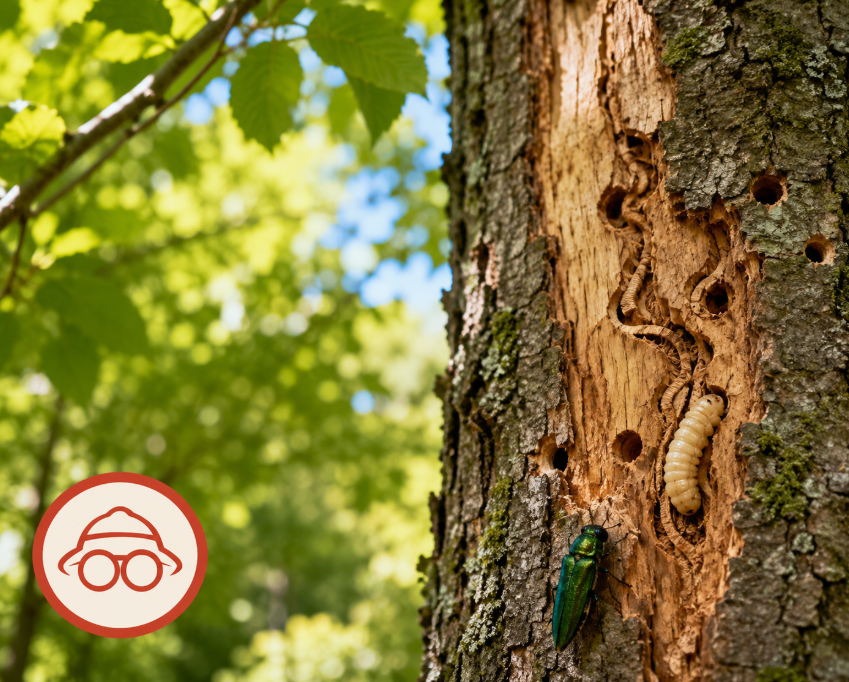
Mid-Summer Insect Alert: How to Spot and Control Tree-Boring Pests in Michigan
Summer is when your shade trees should be thriving; not slowly dying from the inside out.
Unfortunately, July and August are peak months for tree-boring insects in Michigan. These destructive pests tunnel beneath the bark, cutting off the tree's ability to move water and nutrients. By the time leaves begin turning yellow or branches start dying, the damage is often well underway.
The good news? Catching infestations early can often save the tree.
This guide explains how to identify tree-boring insects, recognize the warning signs, and know when professional treatment is needed.
Quick Answer
Tree-boring insects are wood-boring beetles and larvae that tunnel beneath a tree's bark, damaging the tissue responsible for transporting water and nutrients.
Common Michigan tree borers include:
- Emerald Ash Borer
- Two-Lined Chestnut Borer
- Bronze Birch Borer
- Flatheaded Apple Tree Borer
- Various Bark Beetles
Most attacks occur on trees already stressed by:
- Drought
- Construction damage
- Poor soil conditions
- Root injuries
- Disease
Healthy trees are much more resistant to insect attacks.
Why Are Tree Borers Most Active in Mid-Summer?
Michigan's warm summer temperatures speed up insect development.
During July and August:
- Adult beetles emerge
- Females lay eggs in bark crevices
- Larvae tunnel beneath the bark
- Feeding damage rapidly expands
Because the insects spend most of their lives hidden inside the tree, homeowners rarely notice a problem until visible symptoms appear.
Trees Most at Risk in Michigan
Several common landscape trees are especially vulnerable.
Ash Trees
Ash trees remain at risk from the Emerald Ash Borer, even years after the initial outbreak. Untreated trees typically die within a few years of infestation.
Birch Trees
Bronze Birch Borers commonly attack stressed birch trees during hot summers.
Oak Trees
Oak species weakened by drought may attract Two-Lined Chestnut Borers.
Maple Trees
Stressed maple trees can become susceptible to several bark beetle species.
Fruit Trees
Apple and crabapple trees may experience attacks from Flatheaded Apple Tree Borers.
10 Signs Your Tree May Have Boring Insects
Many homeowners first notice changes in the canopy rather than the trunk.
Watch for these warning signs:
1. Thinning Leaves
Sections of the canopy begin looking sparse compared to previous years.
2. Dead Branches
Individual limbs die unexpectedly during summer.
3. D-Shaped Exit Holes
Small holes in the bark are one of the clearest indicators of Emerald Ash Borer activity.
4. Bark Splitting
Vertical cracks may reveal insect tunnels underneath.
5. Woodpecker Activity
Woodpeckers often remove bark while feeding on larvae hidden beneath.
If your tree suddenly attracts many woodpeckers, investigate further.
6. Sawdust Around the Base
Fine sawdust or wood shavings can indicate insect activity.
7. Loose Bark
Sections of bark begin peeling away.
8. Epicormic Sprouts
New shoots emerge from the trunk as the tree struggles to survive.
9. Early Fall Color
Leaves begin changing color weeks before surrounding trees.
10. Sudden Tree Decline
The tree appears healthy one season but rapidly deteriorates the next.
How Tree Borers Kill Trees
Trees transport water and nutrients through a thin layer just beneath the bark called the cambium.
Boring larvae feed directly on this layer.
As tunnels multiply, they eventually "girdle" the tree, preventing water from reaching the canopy.
Without treatment, many infestations become fatal.
Can You Treat Tree Borers Yourself?
Sometimes, but success depends on timing.
Surface sprays rarely reach insects already inside the tree.
Professional arborists often use:
- Systemic trunk injections
- Soil injections
- Targeted insecticide treatments
- Preventative applications
- Tree health improvement programs
Early treatment offers the highest chance of saving valuable trees.
How to Prevent Tree-Boring Insects
Prevention is far easier - and less expensive - than removing a mature tree.
Michigan homeowners should:
- Water trees during dry periods
- Mulch correctly around the root zone
- Avoid damaging trunks with lawn equipment
- Prune dead or damaged branches
- Schedule annual tree inspections
- Treat susceptible species before infestation occurs
Healthy trees naturally defend themselves by producing protective sap that discourages many insects.
When Should You Call a Tree Specialist?
Contact a certified tree professional if you notice:
- Dead branches appearing quickly
- Exit holes in the bark
- Heavy woodpecker activity
- Bark falling off
- Large canopy dieback
- Cracks exposing insect tunnels
Waiting until next spring often allows the infestation to spread.
Frequently Asked Questions
What are the most common tree-boring insects in Michigan?
Emerald Ash Borer, Bronze Birch Borer, Two-Lined Chestnut Borer, Flatheaded Apple Tree Borer, and several bark beetle species are among Michigan's most common tree borers.
Can a tree recover from boring insects?
Yes. Trees caught early can often recover with professional treatment and improved overall health. Severe infestations may require removal.
What month are tree borers most active?
Adult activity typically peaks during late spring through mid-summer, while homeowners often notice damage in July and August.
Are tree borers dangerous to nearby trees?
Yes. Many boring insects spread from weakened trees to nearby susceptible hosts if infestations are left untreated.
How do I know if my ash tree has Emerald Ash Borer?
Common signs include D-shaped exit holes, thinning leaves, bark splitting, heavy woodpecker activity, and shoots growing from the trunk.
Can drought increase tree borer problems?
Absolutely. Drought stress weakens a tree's natural defenses, making it much easier for boring insects to establish infestations.
Protect Your Trees Before Damage Becomes Permanent
Tree-boring insects often remain hidden until significant damage has already occurred. Regular inspections and timely treatment can make the difference between preserving a mature tree and facing a costly removal.
At Safari Tree, our certified arborists help Michigan homeowners identify early signs of insect activity, improve tree health, and recommend treatments that protect valuable landscape trees throughout the growing season.
If you've noticed thinning leaves, dead branches, bark damage, or increased woodpecker activity, schedule a professional tree inspection before the infestation worsens.
Early action is the best investment you can make in the long-term health and beauty of your trees. To protect your trees today, give Safari Tree a call at 888-956-1953.