
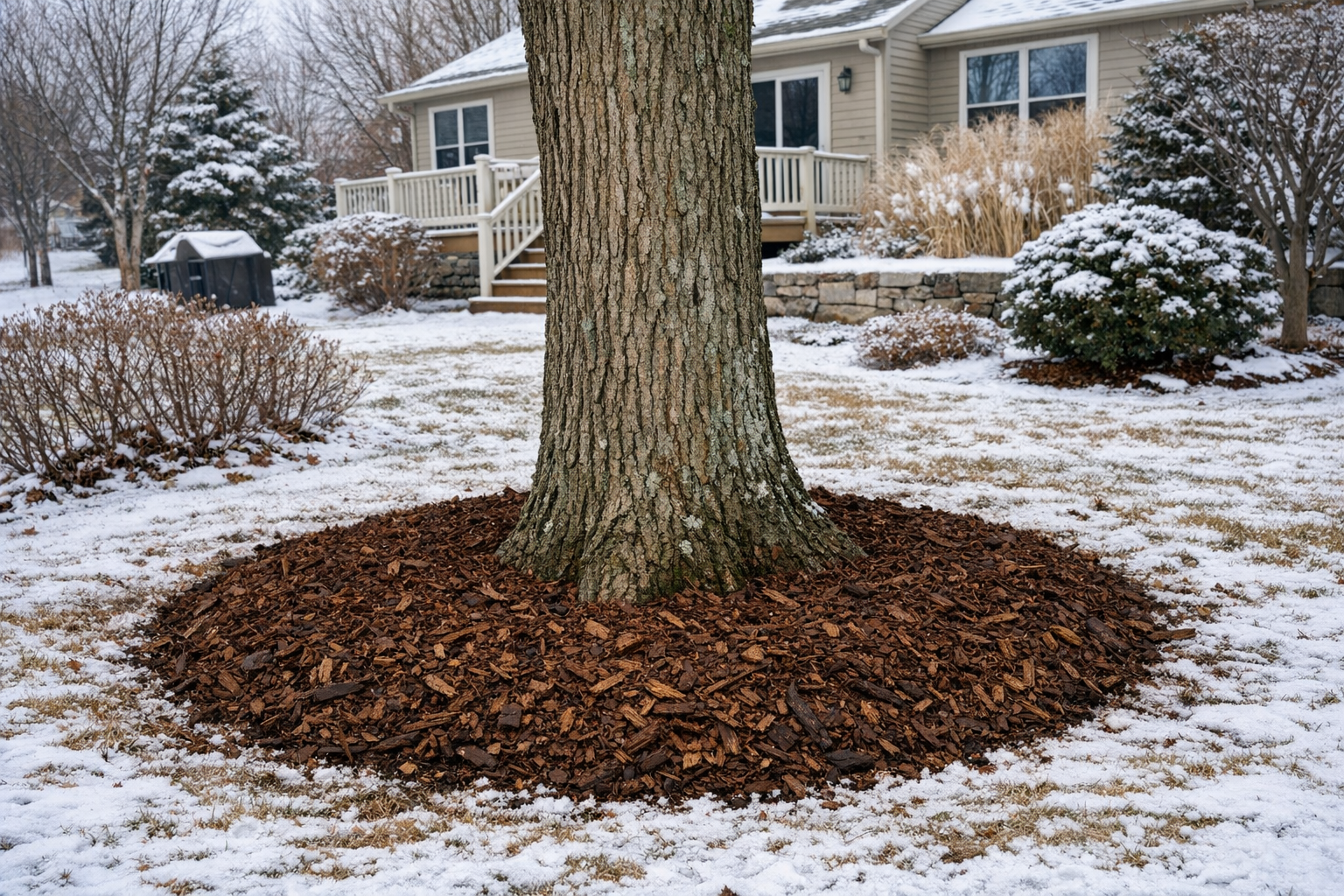
When the temperature drops and the snow starts to fly in Michigan, most of us are thinking about hot cocoa and fuzzy blankets. Our trees, however, are out there braving the elements. While they might look dormant, there is a lot happening beneath the soil—and a little bit of winter mulching can be the difference between a tree that just survives and one that truly thrives come spring.
What Exactly Is "Winter Mulch"?
Think of winter mulch as more than just a decorative touch; it’s a vital health boost for your landscape. Here’s why it matters:
1. It’s a Cozy Blanket for the Roots
Soil temperatures can fluctuate wildly in a typical Michigan winter. One day it’s a deep freeze, the next it’s a sunny 45-degree "January Thaw." This "yo-yo" effect can cause the ground to expand and contract—a process called frost heaving.
This is bad news for plants; it can actually pull small trees right out of the ground or tear their delicate "feeder" roots. A 2-to-3-inch layer of mulch acts as insulation, keeping the underground temperature steady and snug, regardless of what the weatherman says.
2. Deep Hydration (Without the Hose)
Winter air is notoriously dry. Even when there’s snow on the ground, the moisture isn't always reaching the roots. Mulch acts like a lid on a pot, preventing moisture from evaporating out of the soil.
A tree’s roots are still "breathing" and active even when the leaves are gone. This mulch layer ensures that when the ground isn't frozen, your trees can still get a much-needed drink to stay hydrated through the dry spells.
3. Nature’s Slow-Release Vitamin
As organic mulch (like wood chips or shredded bark) breaks down, it turns into "black gold" for your soil. It slowly releases nutrients that improve soil structure and feed the beneficial microbes living underground. It’s basically a slow-release vitamin that preps your tree for the massive energy burst it will need for spring budding.

Pro Tip: The "Sweet Spot" for Timing
A common question we get is: "When is it too late to mulch?" In Michigan, the best time for winter mulching is actually after the first hard frost but before the ground is frozen solid. You want the plants to have officially tucked themselves in for dormancy. If you mulch too early (while it's still warm), you might accidentally trap heat in the soil and encourage the tree to keep growing when it should be sleeping! Aim for that window around late November or early December—but honestly, if the ground isn't a block of ice yet, you can still get it done.
Choosing Your "Flavor": Which Mulch is Best?
Not all mulch is created equal. Depending on what you have in your yard, you might want to pick a specific "flavor":
- Shredded Hardwood: The gold standard for most Michigan yards. It stays put during heavy winds and does a great job of suppressing weeds come spring.
- Pine Bark or Needles: Excellent for acid-loving trees like Evergreens, Oaks, or Maples. Pine needles (also called pine straw) are also great because they don't "mat down," allowing air to flow easily.
- Wood Chips: These are often the most budget-friendly and are fantastic for larger "naturalized" areas of your property where you want a more rugged look.
- A Note on Cedar: It smells great and naturally repels some bugs, but it breaks down slowly, meaning it doesn't add nutrients back to the soil as fast as others.

The "How-To" (Avoid the Infamous Mulch Volcano!)
If you’re going to head out and mulch this weekend, keep the "3-3-3" rule in mind:
- 3 inches deep: Don't go overboard; roots still need to breathe!
- 3 feet wide: Try to cover a nice circle around the base of the tree.
- 3 inches away: This is the big one. Keep mulch away from the trunk. We see "mulch volcanoes" all the time—where mulch is piled high against the bark. This is a big no-no. It creates a dark, moist environment that invites rot, fungus, and even girdling roots that can eventually "strangle" the tree. Keep the base of the trunk clear so it can stay dry.
Wrap It Up
Mulching in the winter isn’t just about making the yard look tidy—it’s an investment in your property’s future. A little effort now means bigger leaves, stronger branches, and a much happier tree when the birds start singing again.