Michigan winters are a marathon for our local canopy. Between the "Polar Vortex" snaps and the heavy ice loads, trees often emerge in the spring showing signs of "winter wear and tear." While some issues are just cosmetic, others are SOS signals that require immediate attention.
Here is how to scout your property for the most common stress indicators this season:
Frost Cracks and Bark Splitting
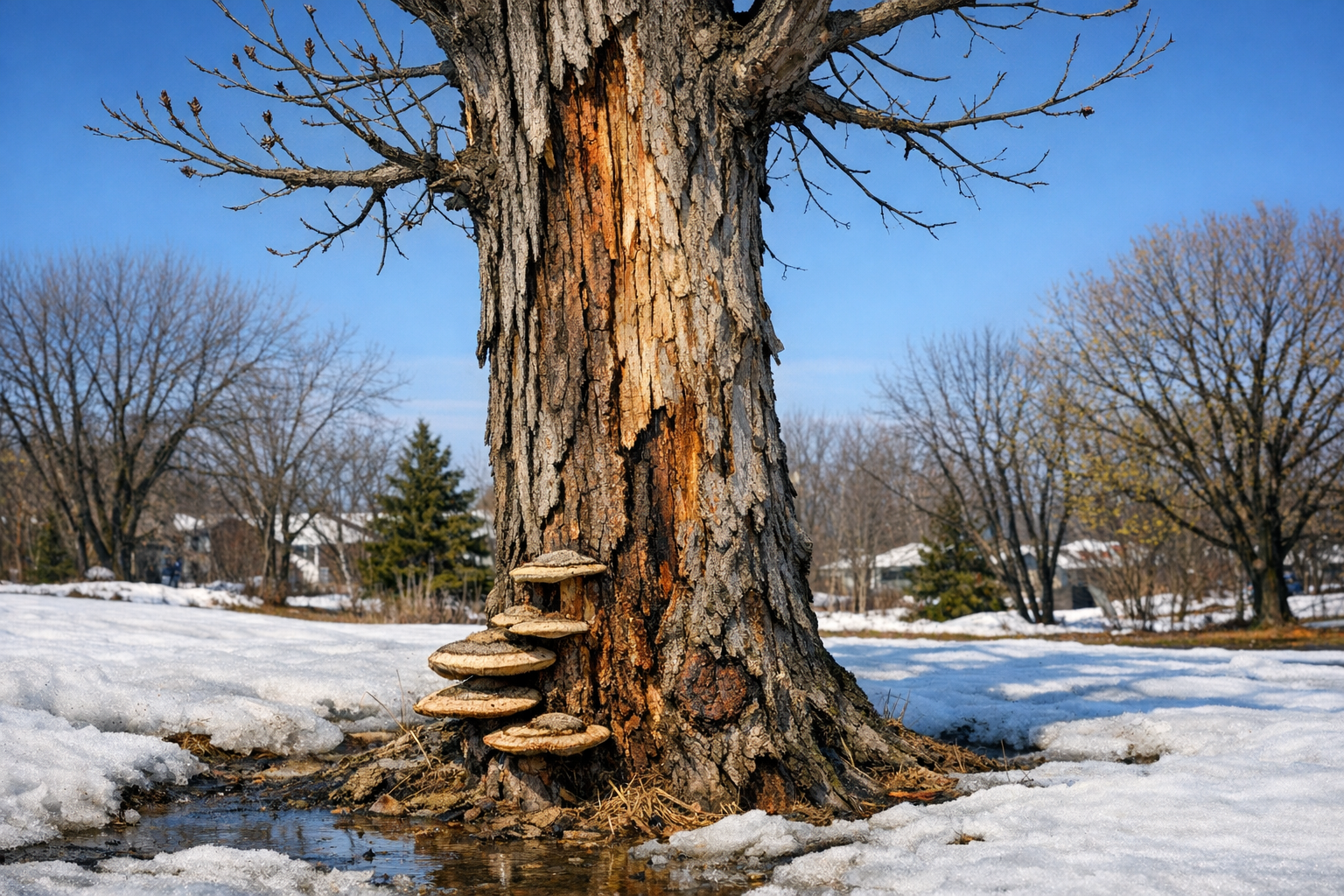
Keep an eye out for deep, vertical cracks in the trunk, typically on the south or southwest side. This is often "sunscald," caused by the dramatic temperature swings between a sunny winter afternoon and a freezing Michigan night.
- The Risk: These openings are like an uncurtained window, inviting in pests and pathogens as the weather warms.

The "Wait and See" on Dead Buds
Late-season frosts can zap the life out of new growth before it even starts. Inspect the tips of the branches:
-
The Test: Gently scratch a small bud with your fingernail. If it’s green and moist inside, there is hope! If it’s brown, brittle, and crumbles to the touch, that section of the branch may have succumbed to winter kill.
Brittle Branches and "Dieback"
If your tree looks like it’s thinning at the very top (the crown) while the rest of the neighborhood is starting to bud out, it may be experiencing dieback. High winds and heavy snow can dry out (desiccate) the upper reaches of a tree, leaving branches brittle and prone to snapping in spring thunderstorms.

Fungal Growth and Cankers
Moisture from melting snow trapped against the bark can create a breeding ground for fungi.
- What to Look For: Look for shelf-like mushrooms growing near the base or "cankers"—discolored, sunken areas on the branches or trunk that look like sores. These are often signs that the tree’s internal transport system is struggling.
When to call in a Professional
Not every crack means a tree is lost, but structural integrity is something you can’t DIY. If you see large-scale bark loss or fungal "conks" appearing on the main trunk, it’s time to have a certified arborist assess whether the tree can be saved through pruning and deep-root fertilization or if it poses a safety risk.
👉 Click Here to Request Your Free Quote 📞Or Call Us Directly at 844-500-8733