
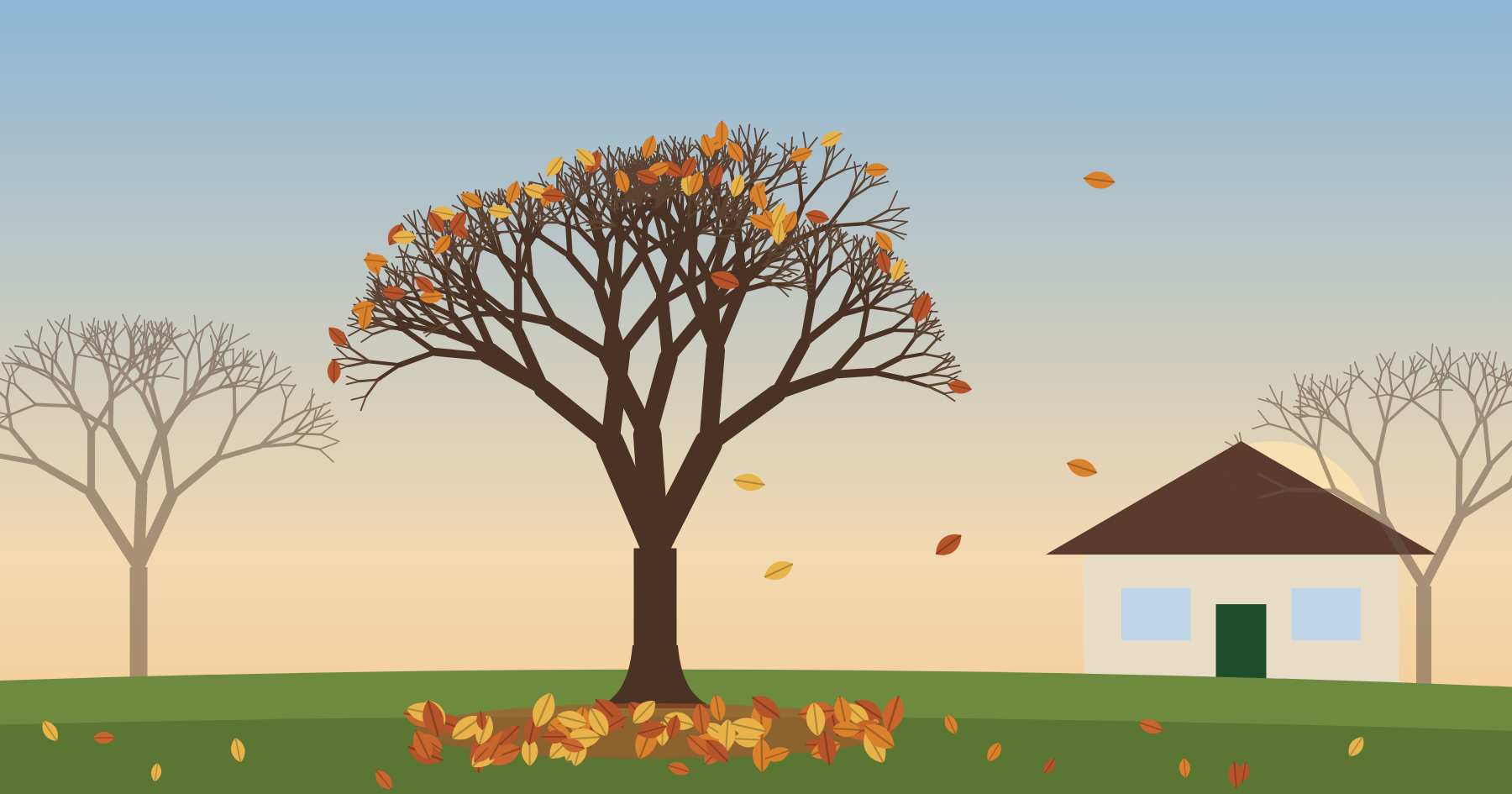
Quick answer: Late fall is a good time to inspect tree structure because deciduous trees have dropped their leaves, so the trunk, branch unions, and canopy are fully visible. Without leaves in the way, an arborist can spot cracks, weak branch attachments, dead limbs, decay, and crossing branches that are hidden for most of the year. It's also the last chance to find and fix structural problems before winter snow, ice, and wind put extra weight and stress on your trees.
Key Takeaways
- Bare branches make structural defects much easier to see than during the leafy months.
- Winter storms add heavy snow and ice loads, so weak limbs are most likely to fail in the months ahead.
- Problems found in late fall can often be corrected with dormant-season pruning, cabling, or bracing.
- Dormant trees handle pruning with less stress, and for some species pruning in the dormant season lowers disease risk.
- An inspection covers the canopy, branch unions, trunk, root zone, and anything the tree could hit if it fails.
Why Is Late Fall the Best Time to See a Tree's Structure?
Late fall is the best time to see a tree's structure because the leaves are gone and the tree's full framework is exposed. In summer, a full canopy can hide most of a tree's branches. Once the leaves drop, it's possible to see how every major limb attaches to the trunk, where branches cross or rub, and whether any part of the canopy is dead or dying.
Late fall also tends to offer clear sightlines from the ground, less undergrowth around the base of the tree, and good visibility of the root flare where the trunk meets the soil.

What Structural Problems Are Easier to Spot in Late Fall?
The structural problems that are easiest to spot in late fall are the ones that leaves usually hide. These include:
- Codominant stems, where two trunks of similar size grow from one point in a tight V shape
- Included bark, where bark gets pinched inside a narrow branch union and weakens the attachment
- Cracks or splits in the trunk or major limbs
- Dead, broken, or hanging branches in the upper canopy
- Crossing or rubbing branches that wear through each other's bark
- Cavities, hollows, and areas of decay
- Fungal growth such as mushrooms or shelf-like conks on the trunk or roots, which can signal internal decay
- A lopsided canopy or a lean that has changed over time

Why Inspect Trees Before Winter?

You should inspect trees before winter because winter storms put extra stress on weak branches and trunks. Snow and ice can add a lot of weight to a canopy, and strong winter winds can push already-weak limbs past their breaking point. A branch with a crack or a poor attachment may hold up fine in calm weather and then fail during the first heavy ice storm.
Finding these problems in late fall gives you time to prune, support, or remove high-risk limbs before they come down on a roof, car, driveway, fence, or power line.

What Does a Late-Fall Tree Structure Inspection Look For?
A late-fall tree structure inspection looks at the whole tree from the top of the canopy to the roots, along with what's around it. An arborist typically checks the following areas.
1. Canopy and Branches
The arborist looks for dead wood, broken or hanging limbs, crossing branches, and uneven weight distribution. Heavy limbs extending far over a roof or driveway get extra attention.
2. Branch Unions
Where branches and stems attach is where many failures start. The arborist checks for tight V-shaped unions, included bark, and cracks forming below a union.
3. Trunk
The trunk is checked for cracks, seams, cavities, oozing, loose or missing bark, and signs of decay such as fungal conks. Sounding the trunk with a mallet can help detect hollow areas.
4. Root Flare and Root Zone
The base of the tree should flare out where it meets the soil. The arborist looks for buried root flares, girdling roots, soil heaving, root damage from construction, and mushrooms growing at the base.
5. Lean and Stability
A tree that has always leaned slightly is usually less concerning than a new lean. Cracked soil or roots lifting on one side can mean the tree is becoming unstable.
6. Targets and Surroundings
The inspection also considers what a tree or limb could hit if it fails, such as your home, vehicles, play areas, walkways, or utility lines. A defect over an empty field is a lower priority than the same defect over a bedroom.

What Happens If an Inspection Finds a Problem?
If an inspection finds a problem, the arborist will recommend a fix based on how serious the defect is and what the tree could damage. Common options include:
- Structural pruning to remove dead, crossing, or poorly attached limbs and reduce weight on weak areas
- Cabling or bracing to add support between codominant stems or weak unions
- Crown cleaning to remove deadwood before winter storms
- Monitoring for minor defects that don't need immediate work
- Removal when a tree is too damaged or decayed to be made safe

Is Late Fall a Good Time to Prune Trees?
Late fall into winter is a good time to prune many trees because they're dormant. Dormant trees put less energy into responding to cuts, and many insects and disease organisms are less active in cold weather. For some species, such as oaks in areas affected by oak wilt, pruning during the dormant season is recommended to reduce the risk of spreading disease. An arborist can tell you the best timing for each tree on your property.
What Can Homeowners Check on Their Own?
Homeowners can do a simple visual check from the ground in late fall. Walk around each tree and look for:
- Dead branches with no buds or with bark falling off
- Hanging or broken limbs caught in the canopy
- Cracks in the trunk or where large limbs attach
- Mushrooms or shelf fungi on the trunk or at the base
- Branches touching the roof, gutters, or power lines
- A new lean or soil lifting on one side of the tree
If you spot any of these, schedule a professional inspection. Never climb a tree or try to cut large limbs yourself, and always stay away from branches near power lines.
Frequently Asked Questions
Why is it easier to inspect trees after the leaves fall?
Without leaves, the tree's branches, unions, and trunk are fully visible. Defects like cracks, dead limbs, and weak attachments that are hidden by a summer canopy become much easier to see.
When should I have my trees inspected?
Late fall, after most leaves have dropped and before winter storms arrive, is an ideal time. Trees should also be checked after major storms and any time you notice cracks, dead limbs, or a new lean.
Can an arborist inspect evergreen trees in late fall?
Yes. Evergreens keep their needles, but late fall is still a good time to check their trunks, roots, and branch unions and to remove weak limbs before snow and ice build up.
What is a codominant stem?
A codominant stem is when two trunks or leaders of similar size grow from the same point. These unions often form a tight V shape with bark trapped inside, which makes them more likely to split.
What does cabling do for a tree?
Cabling installs a flexible support system high in the canopy that limits how far weak stems or limbs can move. It reduces stress on weak unions and lowers the chance of a split.
Are mushrooms at the base of a tree a bad sign?
They can be. Mushrooms or conks at the base or on the trunk can indicate decay inside the roots or trunk. Not all fungi are harmful, so an arborist should take a closer look.
Is it safe to prune trees in late fall?
For most trees, yes. Dormant-season pruning is often less stressful for the tree and can lower the risk of some diseases. Timing can vary by species, so check with an arborist first.
Get Your Trees Ready for Winter
Late fall gives you the clearest view of your trees all year and the last good window to fix problems before winter weather arrives. A structural inspection now can protect your trees, your home, and your family through the season ahead. Contact Safari Tree to schedule a late-fall tree inspection.