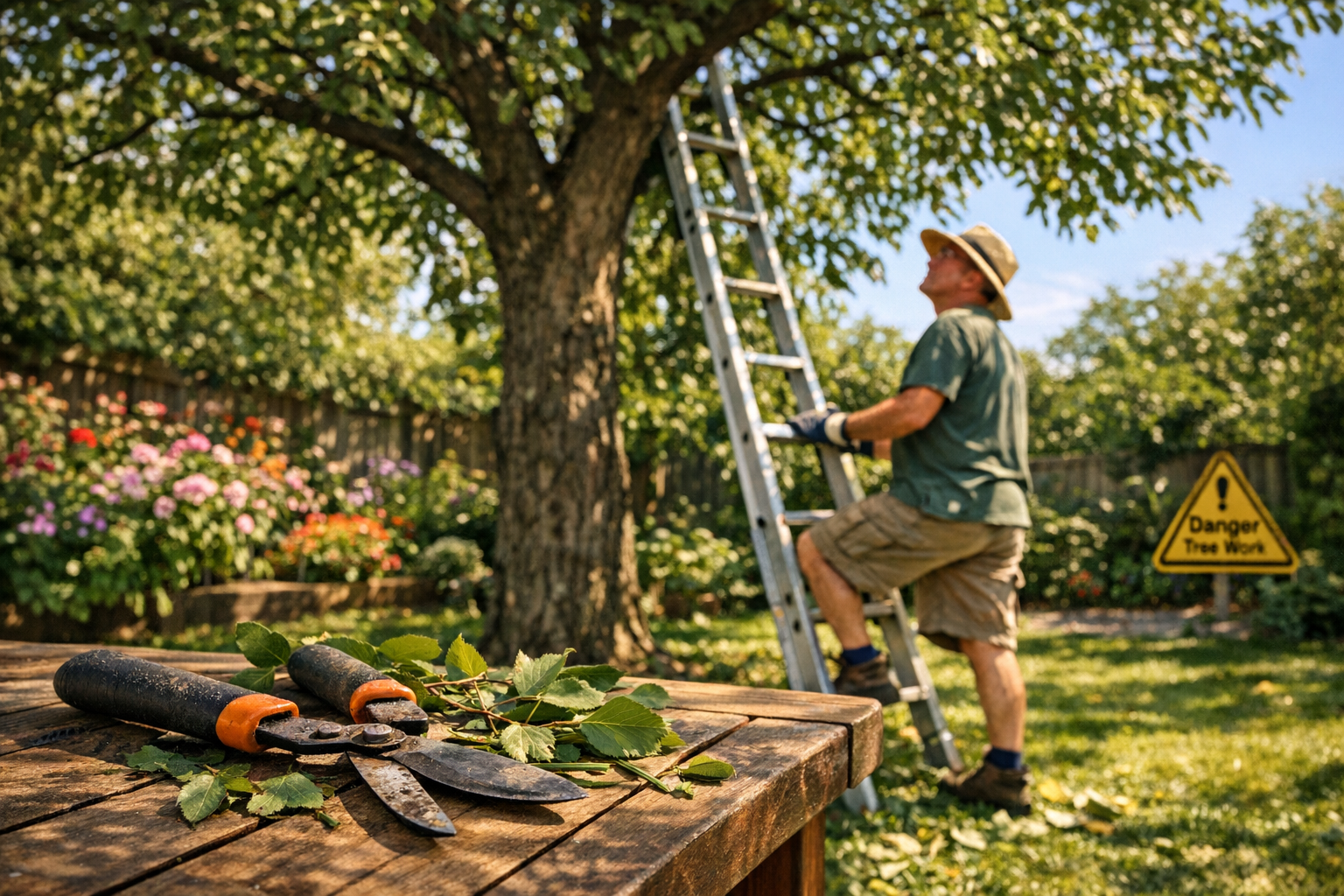
We get it—there is a certain satisfaction that comes with grabbing a pair of shears and spending a sunny Saturday afternoon "tidying up" the backyard. Between YouTube tutorials and Pinterest boards, it’s easy to feel like a certified arborist after one video.
However, while painting a room or fixing a leaky faucet is a great weekend project, trees are living, breathing organisms that don’t always respond well to "trial and error." Sometimes, DIY tree care risks can lead to long-term damage that is much harder (and more expensive) to fix later.
Here is the truth about when to put down the loppers and call in the experts at Safari Tree.
The Pruning "Haircut" Gone Wrong
Pruning is about more than just aesthetics; it’s about the health and structural integrity of the tree. Many homeowners accidentally over-prune, a mistake often called "topping" or "lion-tailing."
- The Risk: When you remove too many branches, the tree loses its ability to produce food through photosynthesis. This stresses the tree, making it vulnerable to disease.
- The Safety Factor: If you’re standing on a ladder with a chainsaw, it’s time to stop. Large limb removal is high-risk work that requires professional tree services to ensure nothing (and no one) gets hurt.

The Pest Guessing Game
Identifying a bug on your tree is one thing; knowing how to treat it safely is another. Many DIY-ers head to the local big-box store and grab the strongest spray they can find.
- The Risk: Misidentifying a pest can lead to using the wrong treatment at the wrong time of year. This doesn't just fail to solve the problem—it can actually kill "good" bugs (like honeybees) or harm the tree itself.
- The Safari Tree Way: Our experts know exactly which pests are active in our local climate and how to target them without disrupting the local ecosystem.
Soil and Mulch Mistakes
Believe it or not, you can actually "smother" a tree with kindness. A common DIY mistake is the "mulch volcano"—piling mulch high against the trunk of the tree.
- The Risk: Excessive mulch traps moisture against the bark, leading to rot and fungal infections. Similarly, over-fertilizing or using the wrong soil nutrients can "burn" the root system.
- The Solution: Proper soil health requires a balance of nutrients and oxygen. We can test your soil to see exactly what your trees are craving.

Is it time to Call the Pros at Safari Tree?
If you aren't sure whether to DIY or call for help, use this quick guide:
| Task | DIY-Friendly? | Call Safari Tree |
| Planting small saplings | Yes! | If you need help choosing the right spot. |
| Light trimming of low bushes | Yes! | If the branches are over your head. |
| Identifying strange leaf spots | Maybe | If the tree looks like it’s thinning or dying. |
| Tree removal or tall pruning | No | Always. This is a job for the pros. |
Your Trees Deserve the Best
At Safari Tree, we love a beautiful yard as much as you do. Our goal isn't just to "fix" trees, but to keep them thriving for years to come. If you’re looking at a project and feeling a bit unsure, give us a shout. We’ll bring the expertise, the equipment, and the peace of mind.
Ready to give your trees a professional check-up? Contact us today!
👉 Click Here to Request Your Free Quote 📞Or Call Us Directly at 844-500-8733