
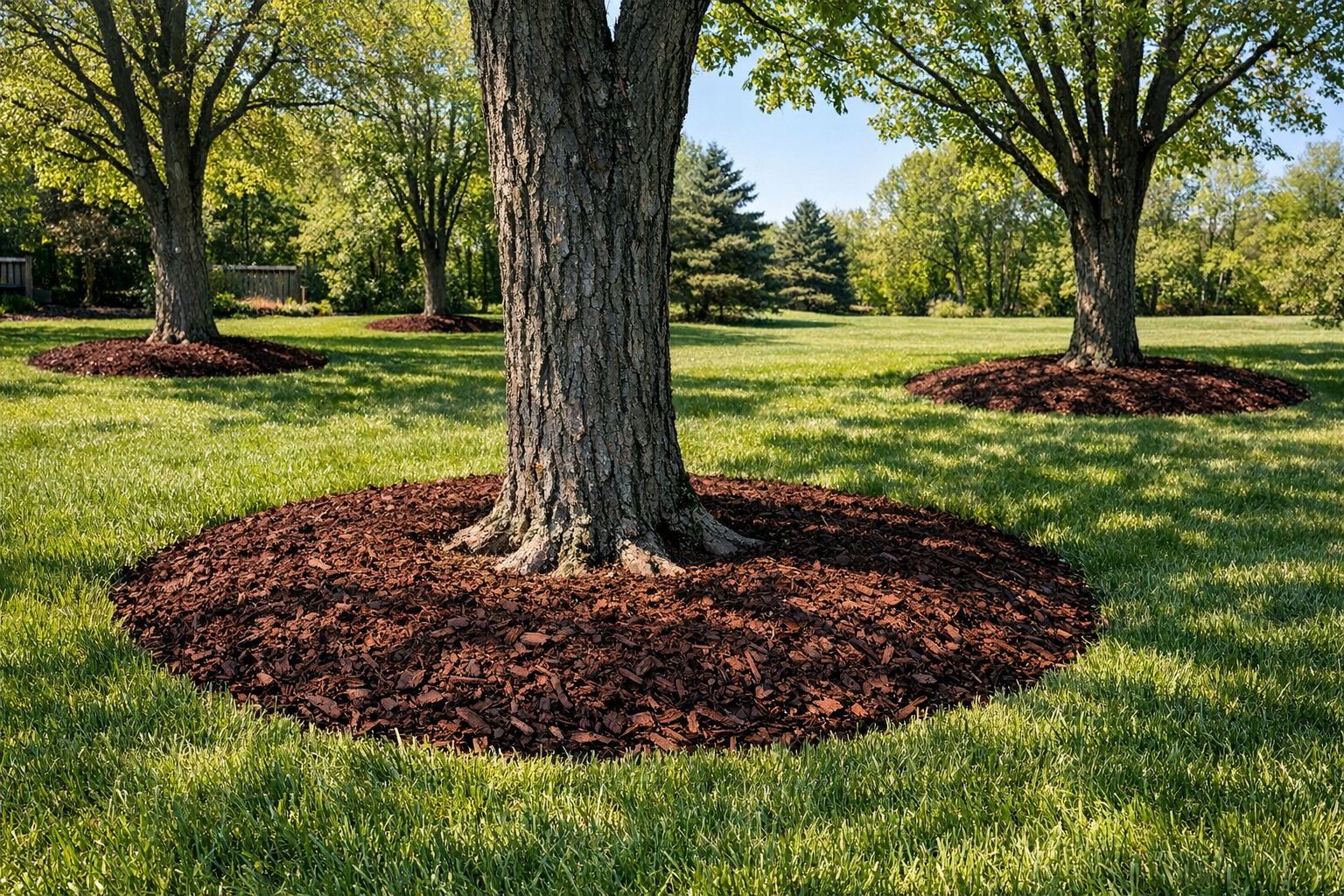
Think of mulch as a multi-tool for your Michigan trees. Mulch does a lot of the heavy lifting, so your trees don't have to.
-
Moisture Magic: Michigan springs can be rainy one week and bone-dry the next. Mulch acts like a sponge, holding moisture in the soil so the roots have a steady drink.
-
AC for the Roots: We all know those "fake spring" days where it’s 70°F on Tuesday and 30°F on Wednesday. Mulch insulates the soil, keeping the root temperature stable so the tree doesn't get "shocked" by the fluctuating weather.
-
Weed Warrior: Mulch puts a physical barrier between the sun and weed seeds. Fewer weeds mean more nutrients are left in the soil for your tree to enjoy.
-
Protection from the "Mower Menace": Having a mulch ring around your tree creates a "no-fly zone" for lawnmowers and weed whackers, preventing those accidental nicks to the trunk that can invite pests and disease.
Tree Mulching Tips: The "Donut" Rule
If you want to mulch like a pro, remember one word: Donut.
-
The 3-3-3 Rule: Aim for a ring that is 3 feet in diameter, 3 inches deep, and keeps a 3-inch gap away from the trunk.
-
Go Wide, Not Deep: You don't need a mountain of mulch. Two to four inches is plenty to get the job done.
-
Texture Matters: Use a high-quality organic mulch (like shredded bark or wood chips). As it breaks down over time, it actually "feeds" the soil with organic matter.

The #1 Mulch Mistake: The "Volcano"
If there is one piece of Safari Tree advice to take to heart, it’s this: Avoid the Mulch Volcano. You’ve probably seen it in some neighborhoods—where the mulch is piled high up against the tree trunk like a volcano. While it might look "tidy" to some, it’s a death sentence for trees.
-
Why it’s bad: When mulch touches the bark, it traps moisture against the trunk. This causes the bark to rot and creates a "luxury hotel" for wood-boring insects and fungus.
-
The Fix: If your mulch looks like a mountain, grab a rake and pull it back. You should always be able to see the "root flare" (where the tree starts to widen at the base) above the mulch line.

Bonus Tip: While You’re Down There… The 60-Second Health Check
Since you’re already at the base of the tree with a rake in your hand, it’s the perfect time to play "Tree Detective." Before you lay down that fresh mulch, take a quick look at the lower trunk and the soil surface for these two red flags:
-
The "Sticky" Test: Notice any sticky residue on the lower leaves or the ground? That’s often "honeydew," a polite name for the waste left behind by scale insects. If you see it, those pests are already waking up for breakfast.
-
The "Fuzzy" Patch: Look for tan, fuzzy-looking lumps on the bark. These are often the egg masses of the Spongy Moth (formerly known as the Gypsy Moth). If you spot them, don't just mulch over them—scrape them into a bucket of soapy water to prevent a "caterpillar explosion" in a few weeks.
Your Trees Deserve the Best
At Safari Tree, we love a beautiful yard as much as you do. Our goal isn't just to "fix" trees, but to keep them thriving for years to come. If you’re looking at a project and feeling a bit unsure, give us a shout. We’ll bring the expertise, the equipment, and the peace of mind.
Ready to give your trees a professional check-up? Contact us today!
👉 Click Here to Request Your Free Quote 📞Or Call Us Directly at 844-500-8733